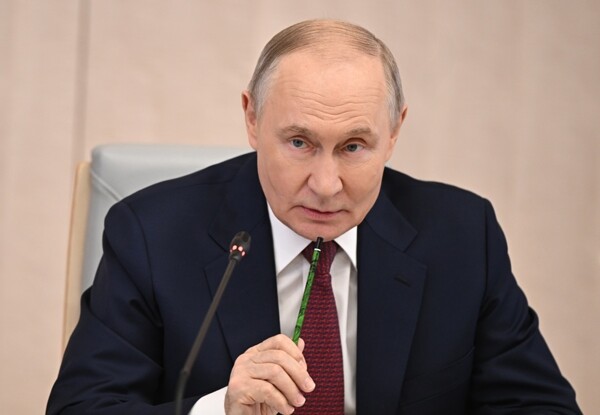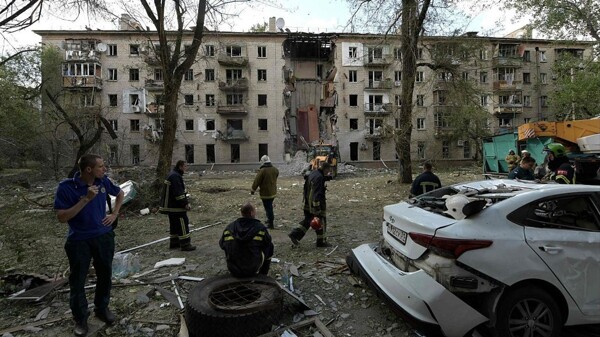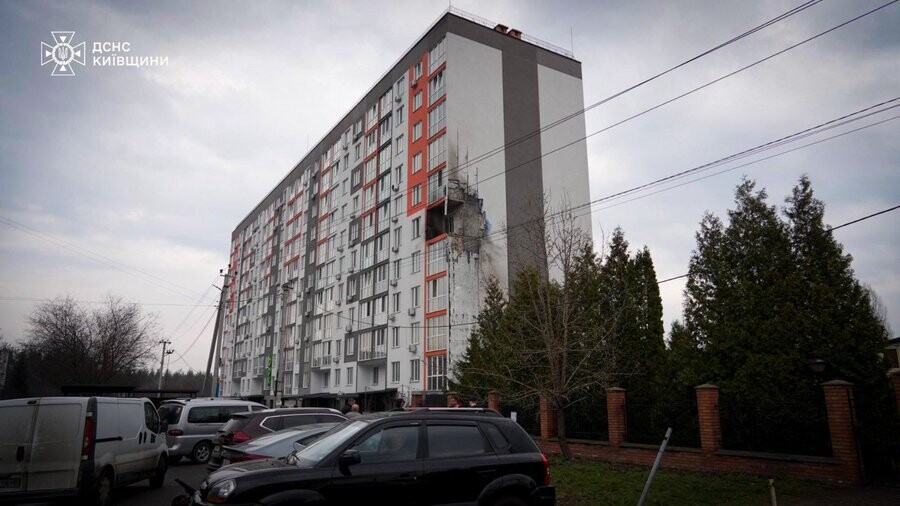
Each new attack on civilian targets confirms that Russian aggression can no longer be disguised as a conventional military operation, but rather as a machinery of devastation against a nation that continues to resist. And if to this is added that the bombing came amid a Ukrainian offer of a truce for Holy Week, the political picture becomes even more eloquent. Putin did not respond with relaxation, but with a demonstration of force against a helpless population. Moscow's message seems increasingly unambiguous: if it cannot break Ukraine on the battlefield, it will try to wear it down by punishing the population, destroying key infrastructure and stretching the war on the backs of civilians. All this happens while Volodymyr Zelensky keeps the door open to an Easter truce, which this year will be celebrated on April 12 in both Ukraine and Russia under the Julian calendar. For months, Moscow favored nighttime attacks, a practice already criminal for its impact on neighborhoods, homes and essential services. Foreign Minister Andrii Sybiha denounced that nearly five hundred drones and cruise missiles were launched against Ukraine and maintained that this is Russia's true response to the proposal for a Holy Week truce: no peace, no negotiation, but aerial terror. However, Ukrainian authorities have been warning that in recent weeks the pattern has changed and that the Russian army has begun to intensify daytime bombings to cause more human damage, disrupt daily life and break society psychologically. The events of Friday spoke for themselves: while Kiev proposed a religious truce, Moscow responded with missiles, drones and more civilian death. In parallel, Ukraine also took the war deep into Russian territory with drone attacks on the Leningrad region, Belgorod and the outskirts of Moscow. While on the Russian side evidence of attacks against neighborhoods, apartment buildings and other civilian areas accumulates, the Ukrainian strikes reported this Friday targeted industrial and logistical facilities of military or strategic value, including an industrial zone in Morozov and other targets linked to the Russian war effort. In that tactical choice there is also a moral and political definition: the Kremlin is once again betting on fear as a tool of war. Spokesman Dmitry Peskov insisted that Russia is not seeking a temporary pause but a lasting agreement, a formulation that at this point works more as diplomatic cover than as a real peace signal. The comparison reinforces a conclusion that is increasingly difficult to hide: Putin's regime is deepening a war methodology that no longer distinguishes between military pressure and deliberate punishment of the population. The new wave ultimately confirms that Russia has crossed another line in its campaign against Ukraine. Kiev - April 4, 2026 - Total News Agency - TNA - Russia once again showed this Friday the most brutal face of its war against Ukraine: massive attacks in broad daylight, residential areas hit, civilian infrastructure damaged and at least eight dead in different parts of the country, in an offensive that Kiev interpreted as a deliberate tactical change to multiply terror and increase civilian mortality. The Ukrainian president said the proposal was conveyed to Moscow through American channels and reiterated his willingness to halt attacks during that date. According to local authorities, there was a 'massive attack' on satellite cities such as Bucha, Vyshhorod and Obukhiv, with dead, wounded and destroyed homes. Civilian casualties were also reported in other regions. The Kremlin's response, however, remained evasive and cold. Deputy Prime Minister Yulia Svyrydenko was even more direct in accusing Russia of deliberately targeting civilians and infrastructure to sow fear. The Kyiv region was once again at the center of the blow. But even there, the difference in objectives was exposed. In Sumy, a guided aerial bomb hit an apartment block. Attacking during the day is not an operational detail: it is a decision that increases exposure, maximizes social impact and raises the risk of killing more civilians. The data is no minor matter. The symbolism of Bucha makes the sequence especially atrocious: just days after another anniversary of the atrocities committed there by Russian forces, Vladimir Putin's army again unleashed fire on an area that already carries one of the worst memories of the invasion.