The European Union, at the G20 summit in South Africa, urges the inclusion of Kyiv, with Ursula von der Leyen warning: “Any initiative must include Ukrainians.”
The Russian ultimatum, coinciding with advances in Pokrovsk (where Ukraine reports 1,000 civilians trapped) and Kupyansk (a fall confirmed by DeepState), is pressuring Zelensky at a vulnerable moment: corruption scandals have led to ministerial resignations, and Trump threatens to cut off arms if he does not sign before November 27 (Thanksgiving Day).
Presidential spokesman Dmitry Peskov emphasized that the “effective work of the Russian Armed Forces” must convince Zelensky that “it is better to reach an agreement now than later,” in a message that coincides with the leak of a controversial 28-point peace plan promoted by the United States, which demands massive territorial concessions from Ukraine in exchange for security guarantees.
The announcement from Peskov, made during a press conference at the Kremlin, comes at a time of Russian momentum on the battlefield.
In exchange, Ukraine receives US security guarantees—with a “decisive” military response to future invasions—confirmed sovereignty on remaining borders, and a $100 billion fund from frozen Russian assets for reconstruction, of which the US takes 50% of the profits.
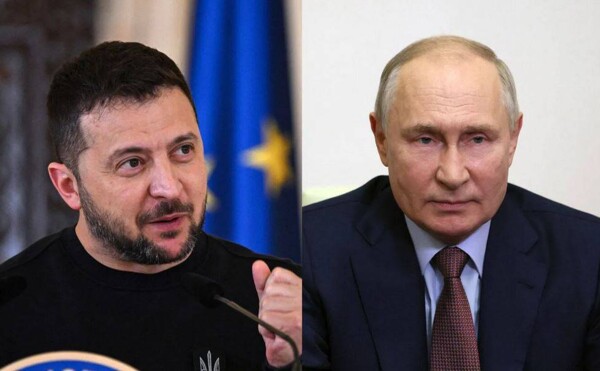
Moscow, November 21, 2025 - Total News Agency - TNA -. The Kremlin hardened its stance for a deal in the war in Ukraine this Friday, launching a direct ultimatum to President Volodymyr Zelensky to start peace negotiations “immediately,” warning that continuing the conflict “is pointless” and “dangerous” for Kyiv, with the “space for free decisions” shrinking amid Russian advances on the eastern front.
Its concessions to Moscow are drastic: de facto recognition of Crimea, Donetsk, Luhansk, Kherson, and Zaporizhzhia as Russian (including the 12% of Donbas still under Ukrainian control), with a demilitarized buffer zone in the east; reduction of the Ukrainian army to 600,000 personnel (from the current 850,000), renunciation of long-range weapons, and a ban on joining NATO; elections in 100 days under international supervision; and a Russian-European non-aggression agreement, with Russia reinstated in the G8 and sanctions lifted.
The spokesman denied having “officially” received the 28-point US plan, presented to Kyiv on Thursday by Pentagon generals, but reiterated fidelity to the bilateral framework with Washington, excluding NATO and Europe.
The peace plan, leaked by Axios and confirmed by the Financial Times, groups its 28 points into four blocks: peace in Ukraine, security guarantees, European stability, and US-Russia-Ukraine relations.
The Kremlin, via Maria Zakharova, reiterated non-aggression toward Europe, but conditional on an end to NATO expansion.
Zelensky, in a video call with European allies this Friday, rejected the plan as “colonial imposition,” insisting on “non-negotiable red lines”: full recovery of territories and NATO as a goal.
Rustem Umerov, a Ukrainian security adviser, denied participation in the draft: “There are no decisions without sovereignty.”
In Moscow, Putin visited the command post of the Zapad grouping, receiving reports on the capture of Kupyansk, and dismissed the negative impact of recent sanctions on Rosneft and Lukoil—which reduced exports to China and India by 20%—stating that they “will not stop the special military operation.”
Ukrainian sources admit that the units in Pokrovsk are “trapped in cauldrons” with heavy losses, while Zelensky promised to “cleanse” Kupyansk with only “60 Russians” present—a claim denied by Western intelligence, which estimates 300 enemy infiltrated personnel with Lancet drones and buggies to evade artillery.
These military successes—which include the capture of Novooleksandrivka in Dnipropetrovsk and advances in Zaporizhzhia—serve as the backdrop to the Russian ultimatum, which Peskov linked to Moscow's rejection of a unilateral ceasefire agreed at the Alaska summit in August 2025.
Europe, led by Olaf Scholz and Emmanuel Macron, proposes freezing the current line without concessions, while Russia estimates 1.7 million Ukrainian casualties.
In Kharkiv, the bastion of Kupyansk has completely fallen into Russian hands after the liberation of Platónovka, allowing total control of the Sievierodonetsk-Krasnyi Lyman route.
“Russia opposes negotiating with a megaphone,” he quipped, alluding to Zelensky's public statements.
“We will work with the US, but the peace must be dignified,” he declared, coordinating with Germany, France, and the UK—which propose the front line as the basis for negotiations, not total concessions—to counter Washington's pressures.
In a conflict with 500,000 dead, this diplomatic pulse could seal Ukraine's fate—or prolong its agony.
In the last week, Vladimir Putin's troops captured 16 localities, consolidating control of 75% of the Pokrovsk bastion in Donetsk—the main objective of the current offensive—and advancing toward Myrnograd and the Pavlohrad road.
Meeting in Istanbul with Recep Tayyip Erdogan—who mediated the 2022 grain deal—the Ukrainian leader avoided Trump's envoy, Steve Witkoff, due to disagreements over the 28 points.
Analysts like Fiona Hill (a former Trump adviser) see the plan as a “Gaza 2.0”: Ukrainian capitulation disguised as peace, with Witkoff and Kirill Dmitriev as architects.