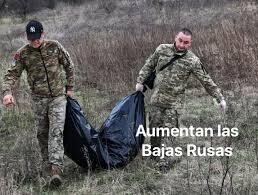
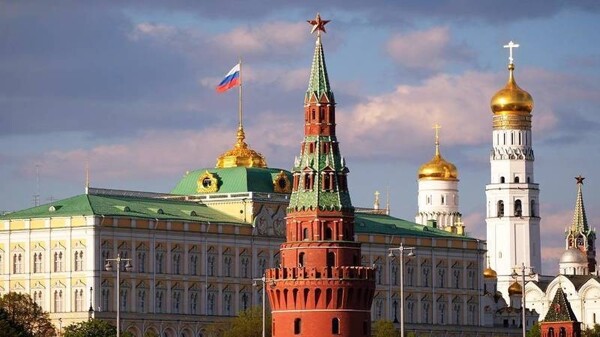
In 2022, a couple detained in Slovenia lived as a typical Argentine family, with children in school, until it was discovered they were undercover Russian agents. Walker links this universe of self-deception to one of the Kremlin's greatest modern strategic errors: the invasion of Ukraine. A century later, the illegal agents program persists, not as proof of greatness, but as a symbol of decay and self-deception. Sources: Investigative journalism by Daniel Arjona; book 'The Illegals: The Never-Told Story of Russia's Most Secret Spy Program' by Shaun Walker; historical archives of the KGB and SVR; testimonies collected by international media; academic analysis of intelligence and international security. They were actually Andrei Bezrukov and Elena Vavilova, SVR agents who had been infiltrated in the West for decades. Their children, raised as American citizens, were completely unaware that their childhood had been a construction designed in Moscow. It was not an occasional omission: their entire identity—name, nationality, family history—was false. What they believed to be real ceased to exist in a matter of minutes. As Arjona explains, the illegal agents program demanded absolute subordination of private life to the mission. In the logic of Russian power, a single potential success justifies hundreds of destroyed identities, fictitious marriages, and children condemned to grow up in a lie. The investigation that Daniel Arjona rescues and amplifies exposes an uncomfortable truth: Russian espionage is not just a geopolitical tool, but a machine that turns human beings into disposable pieces, capable of sacrificing their identity, their morality, and even their own children in the name of a state that is never held accountable. Walker explains that an agent could find the trail of a child born decades earlier to Italian or German parents in the region, and with that birth certificate, reappear legally as a South American citizen. The book recalls notable historical episodes, such as that of Iosif Grigulevich, who became ambassador of Costa Rica to Italy and the Vatican under a false identity. The first illegals of the Bolshevik era were ideological militants, cosmopolitans, accustomed to clandestinity. The conclusion, harsh and persistent, is that the work always took priority. The investigation also dismantles the myth of the omnipotent super-spy. The intelligence system, trapped in an authoritarian logic, ended up telling the power what it wanted to hear, replacing reality with an imperial fantasy. Walker concludes that in the era of biometrics, social networks, and artificial intelligence, creating illegals like those of the Cold War is almost impossible. From the thirties to the present, the region functioned as a true dressing room of identities. The life of the modern illegal agent resembled more a John le Carré novel than an action movie: endless waiting, constant paranoia, bureaucracy, and permanent fear of being discovered. An emblematic case is that of Mikhail Vassenkov, who lived for years in Peru and later in New York under a false identity. However, the archives reviewed by Walker show a very different reality: irrelevant missions, banal information, and a bureaucratic apparatus that fed on its own myth. Over the decades, the program degraded. In a context where the young Soviet Union lacked diplomatic relations, the system proved to be effective. Buenos Aires, January 2026 – Total News Agency-TNA – Behind the heroic iconography of Soviet and Russian espionage, cultivated for decades by state propaganda and revitalized under Vladimir Putin's power, there is a much harsher and devastating reality: lives built on lies, stolen identities, destroyed families, and children raised in total deception. Not for the proven effectiveness of the program, but for its symbolic value. But the internal insurrection never occurred. The answer appears again and again: it was one of the few ways to leave the country, travel, and access an elite status, even without knowing the real cost in advance. In that gear, Latin America played a central role. Having children was not a moral mitigating factor, but another operational tool, even if that implied irreversible psychological damage. Walker interviewed children of spies who grew up in that universe. Walker wonders what could motivate brilliant young Soviet people to choose that path. Convinced that networks of sleeper agents and supposed pro-Russian sympathy would facilitate the occupation, Putin ignored reports that contradicted that vision. But as the State closed in on itself, the program became expensive, slow, and clumsily inefficient. One of the most disturbing methods was that of the 'double dead': appropriating the identity of deceased babies in Western countries, taking advantage of the lax civil records of the mid-20th century. But it is not an extinct tactic. In Soviet and Russian culture, the figure of the perfect agent was elevated to heroic status, especially through characters like Stirlitz. Walker documented cases of illegals who spent years working as messengers, photographers, or administrative employees, without ever accessing relevant strategic information. The construction of these identities involved years of obsessive training, language learning, cultural habits, and extreme surveillance even within Russia, where candidates were forbidden from speaking their mother tongue. The result rarely justified the investment. After decades of infiltration, their real contribution was minimal. In June 2010, in a quiet house in Cambridge, United States, a family was celebrating a birthday when an FBI operative dismantled an entire life. The pattern repeats: loving parents in daily life, but unable to put their children before the mission. It is a program that crosses generations, mutates with regimes, and survives in contemporary Russia, although with less and less operational effectiveness and greater human cost. The narrative starting point of Walker is a real scene that synthesizes that tragedy. Thus, identities such as Don Heathfield or Ann Foley were 'reborn,' the names of dead children who were reused for decades. The conversations after the detentions were traversed by an impossible question to answer: why did they decide to have children knowing that their entire life would be a lie? That human dimension—usually absent from geopolitical analysis—is the central axis of the investigation reconstructed by Daniel Arjona, based on the work of British correspondent Shaun Walker, who documented a century of KGB operations and its heir, the SVR. The story of the so-called illegals—spies without diplomatic cover, trained to fully mimic themselves in foreign societies—does not begin with the Cold War nor end with the fall of the Soviet Union. The result was an intelligence failure comparable, according to the author, to the error of Iosif Stalin in 1941, when he ignored the warnings before the Nazi invasion. In the first days of the war, rumors circulated about spies infiltrated in Ukrainian villages. The combination of European immigration, ethnic diversity, and incomplete records allowed Soviet and Russian services to build credible legends. The State's mandate was explicit, although never written: fatherhood, ethics, and truth always remained behind the duty to the 'Motherland.' Don Heathfield and Ann Foley, a technology consultant and a real estate agent, were not who they said they were. Walker emphasizes that the trauma resided not only in the parents' detention, but in the implosion of truth itself. Even so, the Kremlin persists.

The Secret Lives of Russian Spies: A Century of Lies and Sacrifices
An investigation by Shaun Walker and Daniel Arjona reveals the history of Russia's 'illegal agents' program—spies living under false identities for decades. It analyzes human tragedies, moral compromises, and the gradual degradation of a program that transformed from a tool of greatness into a symbol of decay.