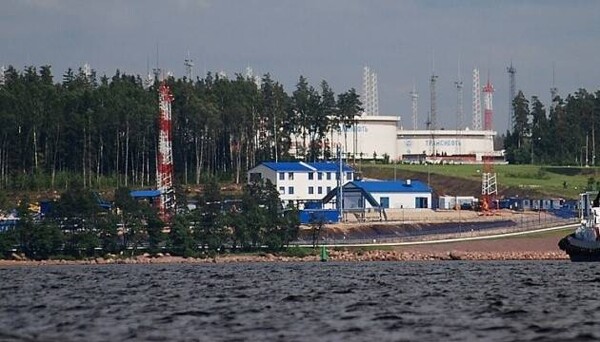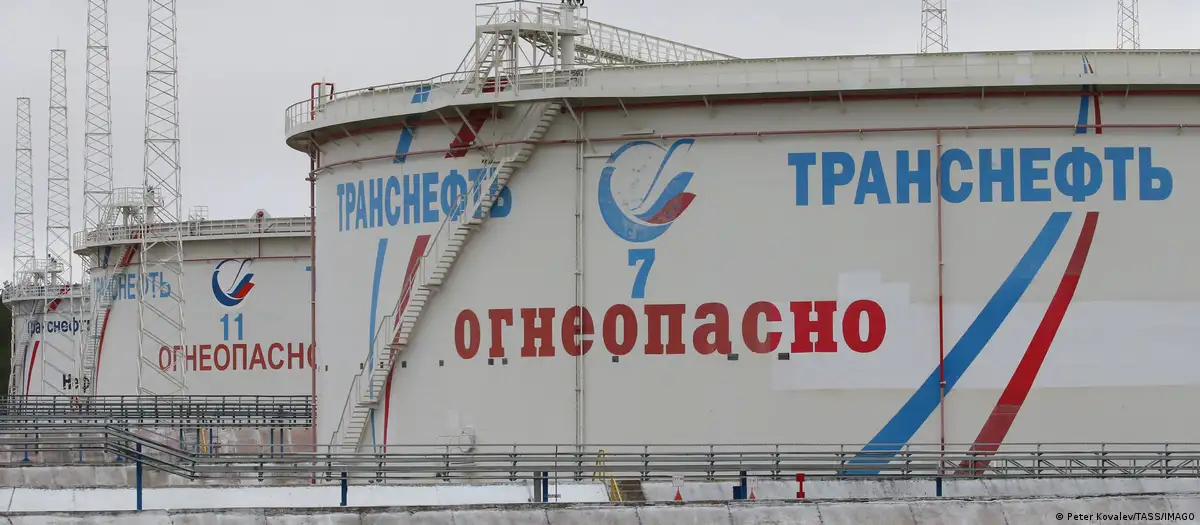
The operation targeted two key pieces of infrastructure that fuel Russian exports and fuel logistics, at a time when the Kremlin is trying to capitalize on the global oil price rebound to restore revenues amidst war. The most significant part of the attack occurred in Primorsk, one of Russia's main oil export ports on the Baltic Sea. Reuters reported that the neighboring port of Ust-Luga resumed its shipments on Monday, but Primorsk remained paralyzed following the airstrikes, after several fuel depots were set on fire. The International Energy Agency, cited by Reuters, had noted that revenues from Russian crude and fuel exports fell in February to their lowest level since the start of the war, but also warned that the rise in oil prices due to the crisis in the Middle East was again improving Moscow's position. For Kyiv, that facility is part of the fuel supply chain for the Russian army, so the attack also had a direct military dimension, beyond the economic damage. The offensive is part of a Ukrainian campaign that is increasingly focused on terminals, refineries, pumping stations, and other infrastructure related to the Russian energy business. Reuters had already reported in recent days that Ukrainian attacks, compounded by bad weather, had been hindering Russia from fully capitalizing on the oil surge caused by the war in Iran. In parallel with the crisis in the Strait of Hormuz, the Trump administration temporarily eased sanctions on Russian and Iranian oil with the intention of mitigating the price escalation. Reuters reported that Washington issued a 30-day waiver for purchases of stranded Russian crude oil and shortly after, another 30-day license to allow sales of Iranian oil already loaded on tankers. For Kyiv, this partial easing of pressure on Russian hydrocarbons worsens the risk that the Kremlin will regain financial oxygen just when it needs to sustain military spending. The Ukrainian concern is not abstract. The Ukrainian General Staff itself stated that around 60 million tons of oil pass through that port annually, resources that end up sustaining Moscow's military machine. Even before Monday's strike, shipments from the three major western Russian ports — Primorsk, Ust-Luga, and Novorossiysk — were projected to be below the original March plan. This backdrop makes the timing chosen by Ukraine even more relevant. According to Reuters, Primorsk can export over one million barrels per day and is one of the main outlets for Urals crude and Russian diesel fuel. Kyiv, March 23, 2026 - Total News Agency - TNA -. Ukraine once again brought the war to the heart of Russia's energy sector with a drone offensive that, according to the General Staff in Kyiv, hit the Transneft oil terminal in the Baltic port of Primorsk, the Bashneft-Ufaneftekhim refinery in Ufa, in the Republic of Bashkortostan. On Monday, Vladimir Putin himself asked his government to make 'balanced decisions' regarding new energy revenues, a sign that the Kremlin already perceives this shift in trend. In that context, Kyiv's message was clear: if Russia intends to finance aggression by taking advantage of the global energy shock, Ukraine will try to turn that revenue into a target. According to the communication issued by the General Staff and picked up by Ukrinform, a fire was also confirmed at the site, and the refinery processes between six and eight million tons of crude per year. The strike on Primorsk and Ufa does not define the course of the war by itself, but it confirms an increasingly visible logic: while the ground front continues to wear down men and munitions, the battle for oil is consolidating as another major trench of the conflict. Sources: Reuters, Ukrinform, DW. The governor of the Leningrad region, Alexander Drozdenko, confirmed the fire in several tanks, while sources in the sector indicated that both Primorsk and Ust-Luga had previously suspended exports due to drone alarms. The strategic value of the target explains why Kyiv targeted it. In other words, the strike did not seek to damage depots only; it aimed at a vital flow of currency to finance the aggressor's offensive. The second target was the Bashneft-Ufaneftekhim plant in Ufa, about 1,400 kilometers from the Ukrainian border.