The Central Bank of Russia (CBR) has filed a multi-billion dollar lawsuit against the Belgian depository Euroclear, marking a new chapter in the legal and economic consequences of Russia's invasion of Ukraine, which began in February 2022.
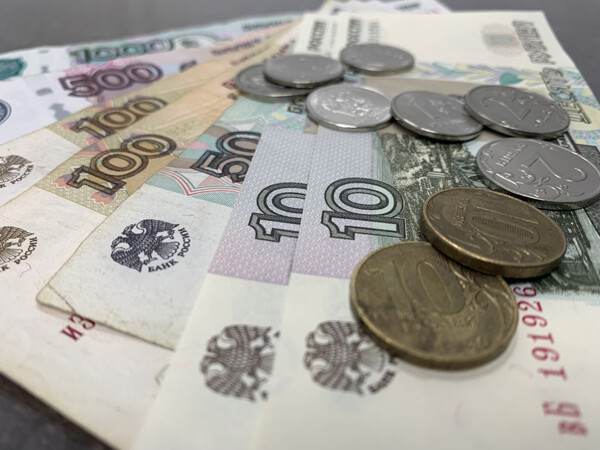
The legal action, filed this Monday with the Moscow Court of Arbitration, seeks compensation of 18.17 trillion rubles, equivalent to approximately 195.8 billion euros. The lawsuit concerns the immobilization and administration of Russian assets frozen under international sanctions imposed by the European Union.
According to Russian judicial sources, the lawsuit alleges that Euroclear used cash and securities belonging to the Central Bank of Russia without the consent of the Russian state, causing direct financial damage and lost profits.
The European Union has indefinitely immobilized around 210 billion euros in Russian assets, most of which are held with Euroclear, as part of the sanctions regime adopted following Russia's military attack on Ukrainian territory.
From Moscow, the Central Bank, chaired by Elvira Nabiullina, argues that the decisions of the European Commission and EU member states constitute a violation of international law and the principle of sovereign immunity. In this regard, it warned that any move to use these funds would be "unconditionally contested" by all available legal means, both in national and international courts.
The Moscow court, considered aligned with the Kremlin's interests, could quickly rule in favor of the Russian Central Bank. The lawsuit against Euroclear aims not only to recover resources but also to send a political and deterrent signal against what Moscow sees as the undue appropriation of its state property.
From the European side, the immobilization of Russian assets is justified as a direct response to the military aggression against Ukraine and as a tool to make the aggressor bear part of the cost of the destruction caused.
In parallel, the CBR has indicated that it is considering initiating actions before international courts and arbitral tribunals in an attempt to curb or legally complicate the European strategy.
The dispute reflects one of the most visible effects of Russia's invasion of Ukraine on the global financial stage. However, political pressure on the Belgian depository has also increased amid the economic strain the war has imposed on Ukraine and its allies.
The Russian claim confirms that the invasion of Ukraine not only led to a high-intensity military conflict but also a global economic and legal war.
Since 2022, Russia has faced progressive isolation from the Western financial system, with frozen assets, restrictions on its banks, limitations on trade, and a sustained loss of access to hard currency.
The Twenty-Seven have recently advanced the decision to keep these funds frozen indefinitely, while discussions continue on their potential use to finance Ukraine's reconstruction, a process that will require hundreds of billions of euros.
Euroclear, for its part, has repeatedly expressed concern about a potential direct confiscation of the assets, warning that it could trigger retaliatory measures from Moscow against European assets in Russia and create a risky precedent for international legal security.
The claimed amount includes not only the blocked funds but also the value of the retained financial instruments and the profits that, according to Moscow, the regulator failed to earn by being unable to dispose of these assets.
The legal filing comes amid growing Kremlin pressure against European plans to use the frozen Russian assets to finance aid and the future reconstruction of Ukraine, devastated by nearly four years of war.
The dispute over the frozen assets exposes the structural impact of sanctions on Russia and, at the same time, the debate in the West on how far to go in using these resources to repair the damage caused by Russian aggression.
If successful, Moscow would then seek to enforce that judgment in other jurisdictions, including UN member countries, opening a scenario of high legal and diplomatic conflict. In this context, the litigation initiated in Moscow appears as a new defensive maneuver by the Kremlin in the face of an increasingly adverse international environment.